




What Supply Chain Dashboards Miss About Risk
Why an Integrated TMS Solution Stabilizes Net Landed Costs
An integrated TMS solution stabilizes net landed costs by improving execution consistency, visibility, and financial predictability.
Net landed cost volatility remains one of the most frustrating challenges for mid-market manufacturers and distributors. Leaders see swings in transportation expense that disrupt forecasts, compress margins, and introduce unnecessary risk. While fuel markets and capacity shifts play a role, the root cause often sits closer to home. An integrated TMS solution creates the structure needed to bring discipline, consistency, and predictability to freight execution, which directly stabilizes net landed costs over time.
Why Net Landed Costs Fluctuate More Than Expected
Net landed costs reflect more than base freight rates. They include accessorials, mode selection, routing decisions, service failures, and exception handling. When those decisions vary from shipment to shipment, cost variability follows.
Many organizations operate with fragmented tools that force teams to make decisions under pressure. Expedites replace planned moves. Accessorials accumulate without early visibility. Carrier selection changes based on availability rather than policy. These patterns introduce noise into cost data and undermine predictability, even when contract rates remain stable.
Over time, teams begin to treat volatility as unavoidable rather than addressable. That mindset limits improvement and hides opportunities to regain control.
The Limits of Disconnected Freight Systems
Disconnected systems create blind spots across planning, execution, and settlement. Transportation teams may lack visibility into upstream demand signals. Finance teams may receive invoice data weeks after delivery. Operations teams respond to issues without understanding cost impact.
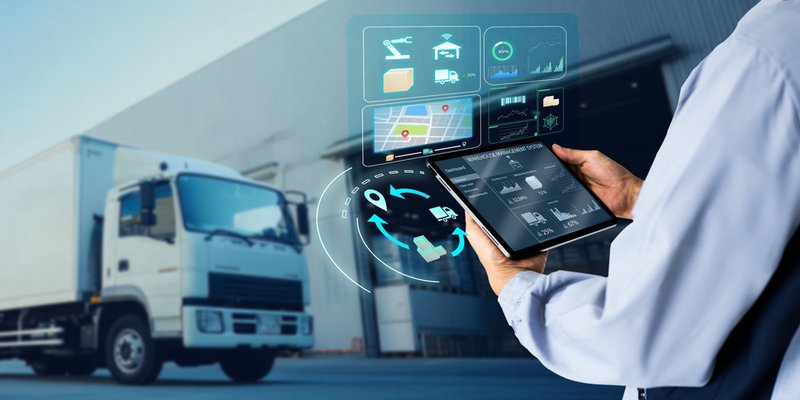
This fragmentation prevents organizations from understanding how decisions made at execution influence landed cost. Without a unified system, teams react to problems rather than preventing them. As complexity grows, the cost of fragmentation compounds and variance becomes embedded in daily operations.
What an Integrated TMS Solution Changes at the Point of Execution
An integrated TMS solution centralizes freight planning, execution, and data capture into a single workflow. Routing logic, carrier selection, and tendering follow consistent rules rather than individual judgment. Shipment data flows through standardized processes instead of ad hoc communication.
This structure improves decision quality at the moment it matters most. When execution follows defined logic, teams spend less time correcting mistakes and more time managing by exception. Repeatability replaces improvisation, which directly reduces landed cost swings.
Creating Discipline Without Sacrificing Flexibility
Cost stability does not require rigidity. It requires controlled flexibility. An integrated TMS supports predefined rules while allowing approved exceptions when conditions demand it.
For example, organizations can define preferred carriers, service levels, and routing strategies while still enabling escalation when service risk rises. The difference lies in visibility. Exceptions become intentional and measurable rather than reactive and hidden.
Over time, this discipline allows organizations to gain full control of complex shipping challenges without slowing operations or limiting responsiveness.
Reducing Accessorial and Exception-Driven Cost Variability
Accessorials often drive the largest swings in landed cost. Lift gate, high cost delivery areas, reclassification, residential delivery, and last-minute changes accumulate quickly when visibility lags execution.
An integrated TMS surfaces these issues earlier and consistently. Teams see trends instead of isolated events. They adjust planning parameters, accessorials, and carrier selection based on patterns rather than anecdotes.
Before improvement occurs, organizations must understand which factors contribute most to variability:
- Repeated service failures that trigger expediting
- Inconsistent pickup and delivery practices across locations
- Carrier performance variation by lane or facility
After identifying these drivers, teams can address root causes rather than chasing symptoms. Over time, accessorial exposure declines and cost behavior stabilizes.
Connecting Execution Data to Financial Outcomes
Net landed cost stability depends on aligning execution data with financial analysis. When shipment data feeds directly into analytics, finance teams gain timely insight into cost behavior and variance drivers.
This connection allows leadership to understand how operational decisions influence margin and forecast accuracy. Variance analysis becomes proactive instead of retrospective. Budgeting reflects execution reality rather than assumptions made months earlier.
When organizations leverage supply chain technology effectively, they replace reactive cost management with governance-driven control.

Supporting Growth Without Increasing Cost Volatility
As organizations grow, complexity increases faster than headcount. New customers, facilities, and service commitments introduce variability that manual processes cannot absorb.
An integrated TMS solution scales execution discipline across volume growth. Standard workflows extend to new lanes and partners without rework. Cost behavior remains predictable even as networks expand.
Without this foundation, growth amplifies volatility. With it, growth becomes manageable and financially sustainable.
Stabilizing Landed Costs Through Continuous Improvement
Cost stability is not a one-time outcome. It results from continuous feedback between execution and analysis. Integrated systems support this loop by capturing consistent data and enabling ongoing refinement.
Teams adjust policies, routing strategies, and carrier allocations based on real performance. Over time, landed costs stabilize not because markets stop changing, but because decision-making adapts faster than disruption.
How KDL Helps Stabilize Net Landed Costs
KDL supports this approach through KDL Connect TMS, which centralizes freight execution and applies consistent decision logic across shipments. By combining integrated technology, analytics, and experienced logistics teams, KDL helps organizations reduce variability, strengthen cost predictability, and stabilize net landed costs as networks grow. Learn more about what we can do for you. Contact us today.